

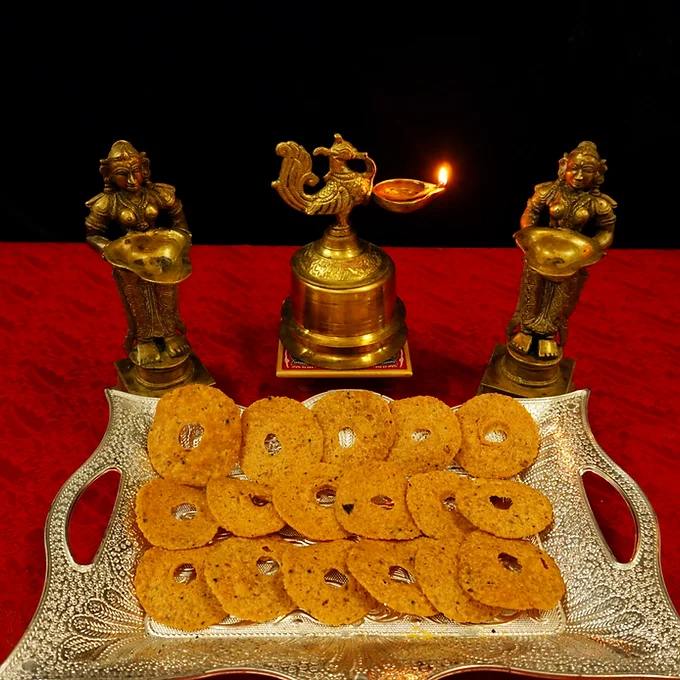
The Secret Behind Perfectly Crispy Murukku and Fresh South Indian Savouries
South Indian savouries such as murukku, mixtures, and ribbon pakoda are loved for one defining quality — their crispness. That light, satisfying crunch is not accidental. It is the result of careful ingredient selection, precise preparation, and traditional techniques that have been followed in home kitchens for generations. While the recipe may look simple, achieving consistent crispness requires attention to detail at every stage.
In traditional South Indian households, savouries are prepared with patience rather than speed. Each step is treated with care, ensuring that texture, flavour, and freshness come together harmoniously. This approach is what truly sets authentic savouries apart from mass-produced alternatives.
The Importance of Flour Quality
The foundation of crispy murukku begins with flour. Rice flour must be fine, clean, and properly processed to ensure a light texture. Traditionally, rice is washed, dried, and ground to achieve the right consistency. Urad dal flour is added in measured quantities to enhance crispness and prevent hardness.
When flour quality is compromised, the final product suffers. Coarse flour can result in uneven texture, while poor-quality flour may absorb excess oil during frying. Using the right blend ensures that murukku remains crisp without becoming dense or brittle.
Achieving the Right Spice Balance
South Indian savouries are known for their balanced flavour rather than overpowering spice. Ingredients such as sesame seeds, cumin, ajwain, and mild chilli add depth and aroma without masking the natural taste of the flour.
Spices are mixed evenly into the dough to ensure consistency in every bite. Too much spice can dominate the flavour, while too little may leave the snack tasting flat. Traditional recipes rely on subtlety, allowing each ingredient to contribute without overpowering the whole.
Dough Consistency Makes or Breaks the Snack
One of the most critical aspects of savoury preparation is dough consistency. The dough should be soft enough to shape easily, yet firm enough to hold its structure when pressed or shaped.
If the dough is too dry, murukku may crack or become overly hard after frying. If it is too soft, it can absorb excess oil and lose its crispness. Traditional snack-makers rely on touch and experience rather than strict measurements, adjusting water and fat gradually to achieve the perfect balance.
The Role of Oil Quality and Temperature
Oil plays a vital role in determining both flavour and texture. Fresh oil with a neutral aroma allows the natural taste of the snack to shine through. Reused or overheated oil can alter flavour and affect crispness.
Equally important is maintaining the correct frying temperature. Oil that is too hot will brown the snack quickly while leaving the inside undercooked. Oil that is too cool will cause the snack to absorb oil, resulting in a heavy, greasy texture. Traditional frying involves steady heat and patience, allowing the snack to cook evenly and release moisture gradually.
Small-Batch Frying for Better Results
In home-style preparation, savouries are fried in small batches. This allows better control over oil temperature and ensures even cooking. Frying too many pieces at once lowers the oil temperature and affects texture.
Small batches also help maintain oil quality, which directly impacts flavour and freshness. Each batch receives the same level of attention, resulting in consistent crispness across all pieces.
Freshness Through Thoughtful Preparation
Freshness is a defining factor in the quality of South Indian savouries. Snacks prepared in small quantities retain their crunch and aroma far better than those stored for long periods. Traditional methods prioritise freshness over extended shelf life.
By preparing savouries in controlled batches and storing them properly, the natural texture and flavour are preserved. This approach ensures that each bite delivers the same satisfaction as snacks freshly made at home.
Why Traditional Methods Still Matter
Modern equipment can speed up production, but it cannot replace the judgment and care involved in traditional snack-making. Home-style methods allow adjustments based on feel, sight, and aroma — skills developed through experience.
At Suswaad, these traditional principles guide every preparation. Ingredients are handled with care, processes are followed with discipline, and quality is never compromised for speed. This ensures that savouries reflect the authenticity and trust associated with home-made snacks.
A Crunch That Reflects Tradition
Perfectly crispy murukku and savouries are the result of balance, between ingredients, technique, and timing. When these elements come together, the result is a snack that feels light, flavourful, and deeply satisfying.
Traditional South Indian savouries are more than snacks; they are a reflection of culinary heritage. By respecting time-tested methods and focusing on freshness, they continue to deliver a taste that generations have trusted and enjoyed.